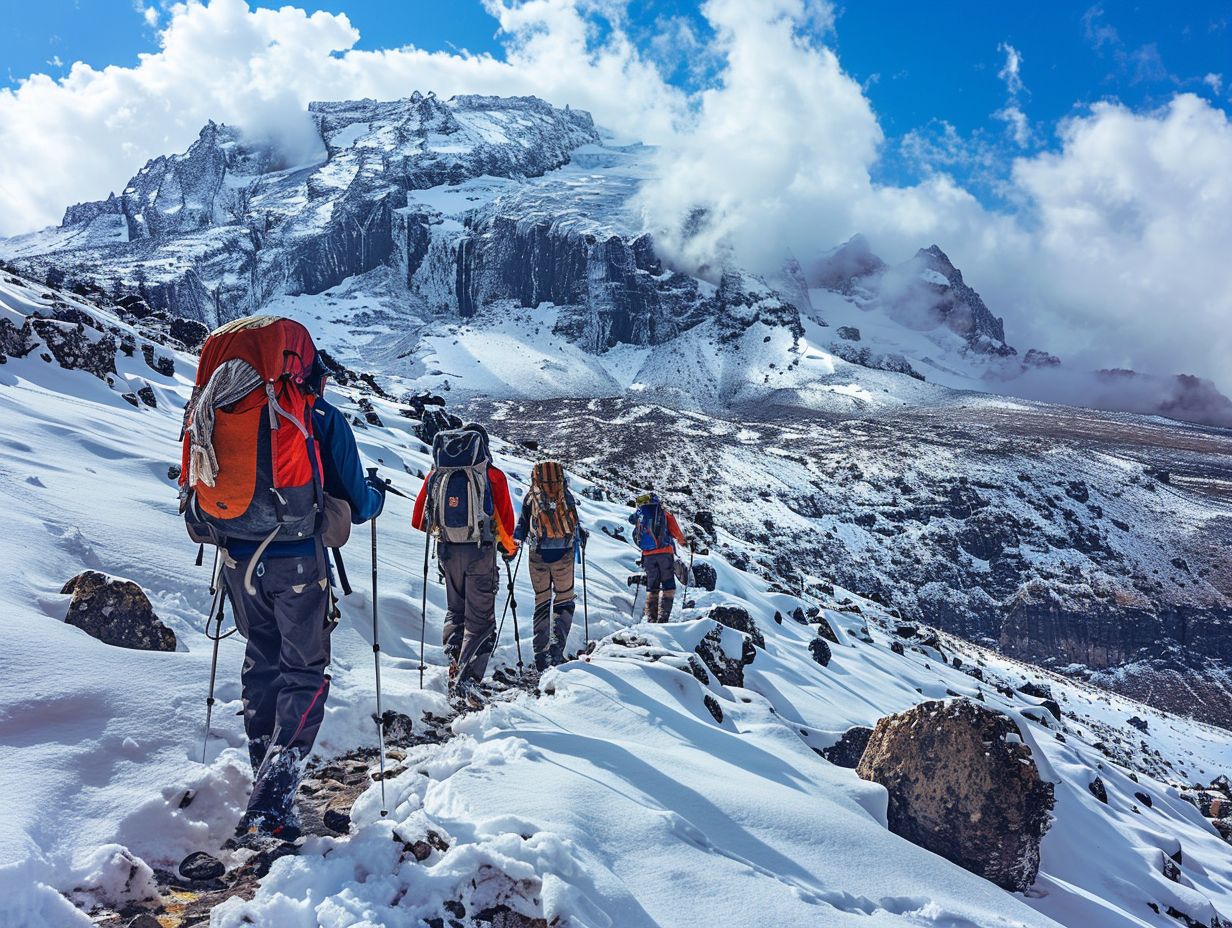
Mount Kilimanjaro, standing at 5,895 meters, is one of the world’s most iconic trekking destinations. Since its first successful ascent in 1889, it’s estimated that over 1 million people have attempted to reach its summit. Each year, around 50,000 climbers embark on this adventure, drawn by its breathtaking landscapes and the challenge it presents.
The Tanzania Adventures Group plays a crucial role in helping climbers safely navigate the mountain. With expert guides and tailored itineraries, they ensure climbers enjoy a memorable experience while minimizing risks like altitude sickness. Climbing Kilimanjaro is not just a trek; it's a journey through diverse ecosystems and stunning vistas.
For more information on climbing Kilimanjaro or to book your adventure, contact us via WhatsApp at +255754042154. Join the countless adventurers who have experienced the thrill of summiting Africa’s highest peak!
Tanzania Adventures
Mount Kilimanjaro, Africa’s highest peak, has long been a coveted destination for adventurers and hikers. Since its first successful ascent in 1889, it is estimated that over 1 million people have attempted to reach its summit. This figure reflects the mountain's growing popularity as a trekking destination.
The allure of Kilimanjaro lies not only in its majestic height of 5,895 meters (19,341 feet) but also in the diverse ecosystems that climbers encounter along the way. From lush rainforests to arctic landscapes, the journey offers a unique adventure for climbers of all skill levels.
Tanzania Adventures Group plays a pivotal role in guiding trekkers safely to the summit. With experienced guides and tailored itineraries, they ensure that climbers not only achieve their goal but also have a memorable experience.
In recent years, the number of climbers has surged, with estimates suggesting that around 50,000 people attempt to summit Kilimanjaro each year. This increase is fueled by improved accessibility and a rise in global adventure tourism.
Despite its accessibility, climbing Kilimanjaro is not without challenges. Altitude sickness remains a significant risk for many climbers, making proper acclimatization essential. The Tanzania Adventures Group emphasizes the importance of gradual ascent to minimize these risks.
Climbing seasons also influence the number of ascents. The best times to climb are generally during the dry months of January to March and June to October, which see the highest foot traffic on the mountain.
Social media has played a substantial role in popularizing Kilimanjaro. With countless climbers sharing their experiences online, more adventurers are inspired to embark on their own journeys to the summit.
The variety of routes to the summit—such as the Machame, Lemosho, and Marangu routes—caters to different preferences and skill levels, attracting a diverse group of climbers. Each route offers unique landscapes and experiences, ensuring that no two climbs are the same.
Moreover, the impact of climbers on the local economy is significant. Tourism provides employment opportunities for local guides, porters, and support staff, fostering community development in the surrounding regions.
As interest in climbing Kilimanjaro continues to grow, sustainable practices are becoming increasingly important. The Tanzania Adventures Group advocates for responsible tourism to protect the environment and preserve the mountain for future generations.
Statistics about climbers reveal fascinating insights. For instance, a large percentage of climbers are between the ages of 20 and 40, and many come from countries like the United States, the United Kingdom, and Germany. This demographic shift showcases the global appeal of Kilimanjaro.
In conclusion, the number of people who have climbed Kilimanjaro is a testament to its status as one of the world's premier trekking destinations. With the support of organizations like the Tanzania Adventures Group, more climbers can safely experience the breathtaking beauty and challenge of reaching the Roof of Africa.