
Deciding between solo and group trekking on Kilimanjaro is a pivotal choice that impacts the entire expedition experience. This comprehensive article delves into the pros and cons of both solo and group trekking options, covering aspects such as safety, support, flexibility, camaraderie, and cost. Whether you're seeking solitude and independence or camaraderie and shared experiences, this guide empowers you to make an informed decision and embark on a Kilimanjaro journey that aligns with your preferences and goals.
Embarking on a Kilimanjaro expedition is a momentous decision that requires careful consideration of various factors, including whether to trek solo or join a group. Solo trekking offers freedom, independence, and solitude, while group trekking provides safety, support, and camaraderie. This article serves as a comprehensive guide to Kilimanjaro solo vs. group trekking, exploring the advantages and disadvantages of each option and empowering climbers to choose the path that best suits their preferences, experience level, and goals.
Tanzania Adventures
Here, we explore the pros and cons of Kilimanjaro solo vs. group trekking to help you make an informed decision and embark on a journey that aligns with your preferences and aspirations.
Solo trekking on Kilimanjaro offers unparalleled freedom and independence, allowing climbers to set their own pace, itinerary, and route. Without the constraints of a group schedule, solo trekkers can tailor their expedition to their preferences and priorities, whether it is chasing sunrise views, taking scenic detours, or enjoying moments of solitude amidst the wilderness.
Solo trekking presents a unique personal challenge, requiring self-reliance, resilience, and decision-making skills. Climbers must navigate the mountain's challenges independently, from acclimatization and route finding to managing emergencies and overcoming obstacles. Solo trekkers have the opportunity to test their limits, push their boundaries, and discover their inner strength and resourcefulness along the way.
Solo trekkers enjoy maximum flexibility and adaptability, allowing them to adjust their plans on the fly based on changing conditions, preferences, and goals. Whether it is extending a rest day, exploring a side trail, or altering the itinerary to accommodate personal interests, solo trekkers have the freedom to make spontaneous decisions and customize their Kilimanjaro experience according to their desires.
Solo trekking on Kilimanjaro offers moments of solitude and reflection amidst the vastness of the mountain landscape. Away from the distractions of group dynamics and social interactions, solo trekkers have the opportunity to connect with nature, immerse themselves in the present moment, and experience a profound sense of introspection and self-discovery.
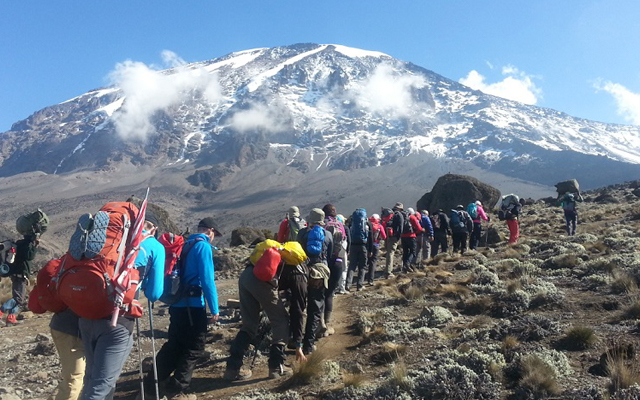
Group trekking on Kilimanjaro provides safety, security, and support, particularly for less experienced climbers or those unfamiliar with the terrain. Climbers benefit from the expertise of experienced guides and the reassurance of traveling with a knowledgeable support team who can offer guidance, assistance, and emergency response in case of need.
Group trekking fosters camaraderie, friendship, and shared experiences among climbers, creating bonds that last a lifetime. Climbers have the opportunity to connect with like-minded adventurers from around the world, share stories, laughter, and challenges, and celebrate their achievements together as they journey to the summit of Kilimanjaro.
Group trekking offers logistical convenience and peace of mind, as many aspects of the expedition, such as permits, accommodations, meals, and transportation, are organized and coordinated by the tour operator or trekking company. Climbers can focus on enjoying the journey without the stress of planning and logistics, knowing that everything is taken care of by experienced professionals.
Group trekking allows climbers to share resources, gear, and expenses, reducing the overall cost of the expedition. Group discounts may be available for permits, accommodations, and transportation, making Kilimanjaro more accessible and affordable for budget-conscious climbers. Additionally, sharing gear and equipment among group members can lighten the load and minimize the need for individual purchases or rentals.