
The glaciers of Mount Kilimanjaro have long captivated climbers with their shimmering beauty, but they also serve as poignant indicators of our planet's changing climate. This article explores observations of Kilimanjaro's glacial retreat, documenting the dramatic loss of ice over the past century and its implications for local ecosystems, water resources, and global climate patterns. By studying the evolution of Kilimanjaro's glaciers, scientists and climbers alike gain valuable insights into the complex interplay between human activities and environmental change.
Mount Kilimanjaro's glaciers have long been emblematic of Africa's highest peak, but their steady retreat offers a sobering reminder of the impacts of climate change. This article delves into observations of Kilimanjaro's glacial decline, tracing the history of ice loss and its consequences for the surrounding environment. From melting icefields to receding snow caps, these observations provide valuable insights into the effects of global warming on one of the world's most iconic mountains, underscoring the urgent need for climate action.
Tanzania Adventures
Here's an overview of observations documenting Kilimanjaro's glacial decline:
Early Reports: The first scientific observations of Kilimanjaro's glaciers date back to the late 19th century, with reports of extensive ice cover on the mountain's summit. Explorers and researchers marveled at the glaciers' size and beauty, documenting their presence in photographs and written accounts.
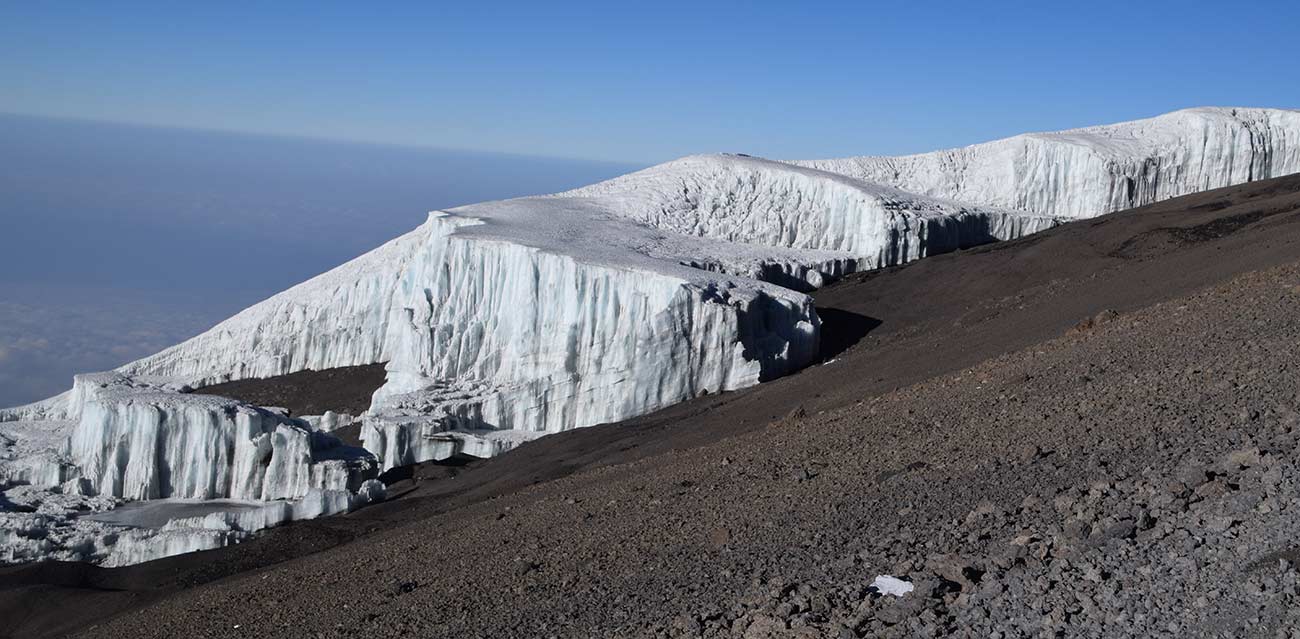
Accelerated Retreat: Since the early 20th century, Kilimanjaro's glaciers have undergone rapid retreat, with significant ice loss observed in the past few decades. Satellite imagery and aerial surveys have provided valuable data on the extent and rate of glacial decline, revealing alarming trends of shrinking icefields and receding snow lines.
Field Studies: Scientists conduct field studies and monitoring programs to track changes in Kilimanjaro's glaciers, measuring ice thickness, surface area, and volume over time. These studies utilize remote sensing techniques, ground-based measurements, and ice core analysis to assess the health and stability of the glaciers.
Glacial Recession: Observations indicate that Kilimanjaro's glaciers have experienced significant recession since the mid-20th century, with some estimates suggesting a loss of over 80% of their total ice volume. The glaciers have retreated at an accelerating rate, with large sections of ice disappearing entirely in recent years.
Environmental Effects: The retreat of Kilimanjaro's glaciers has profound implications for the surrounding ecosystem, affecting water availability, biodiversity, and local weather patterns. Reduced ice cover diminishes water sources for rivers and streams, threatening the livelihoods of communities downstream and exacerbating water scarcity in the region.
Global Significance: Kilimanjaro's glacial retreat serves as a visible indicator of climate change, highlighting the far-reaching impacts of human activities on Earth's climate system. The loss of ice on Kilimanjaro contributes to rising sea levels, altered weather patterns, and shifts in regional climates, with implications for ecosystems and human societies worldwide.
Continued Decline: Climate models project that Kilimanjaro's glaciers will continue to shrink in the coming decades, with some studies suggesting that they could disappear entirely within a few decades. Rising temperatures, reduced snowfall, and changing precipitation patterns are expected to drive further glacial retreat, exacerbating environmental challenges in the region.