
Mount Kilimanjaro, with its majestic peaks piercing the African sky, holds a geological legacy as fascinating as it is awe-inspiring. This article delves into the intricate geological history and formation of Kilimanjaro, shedding light on the forces that shaped this iconic mountain over millions of years.
Rising abruptly from the Tanzanian plains, Mount Kilimanjaro stands as a geological marvel, its snow-capped summit a testament to the dynamic forces that have sculpted the landscape over millennia. The story of Kilimanjaro's formation is one of tectonic upheaval, volcanic activity, and climatic fluctuations, resulting in the creation of Africa's tallest peak.
Tanzania Adventures
Here, we unravel the geological mysteries of Kilimanjaro and explore the processes that have shaped its distinctive features:
The geological history of Kilimanjaro can be traced back to the rifting of the East African Rift System, a tectonic boundary where the African Plate is gradually splitting apart. Around 25 million years ago, the movement of tectonic plates caused the uplift of the East African Plateau, giving rise to the ancestral precursor of Kilimanjaro.
Approximately one million years ago, volcanic eruptions along the East African Rift Zone triggered the formation of Kilimanjaro's volcanic cones. The mountain is composed of three main volcanic peaks: Kibo, Mawenzi, and Shira. Kibo, the tallest and most prominent peak, is characterized by its dormant volcanic crater, while Mawenzi and Shira exhibit rugged, jagged peaks formed by volcanic activity.
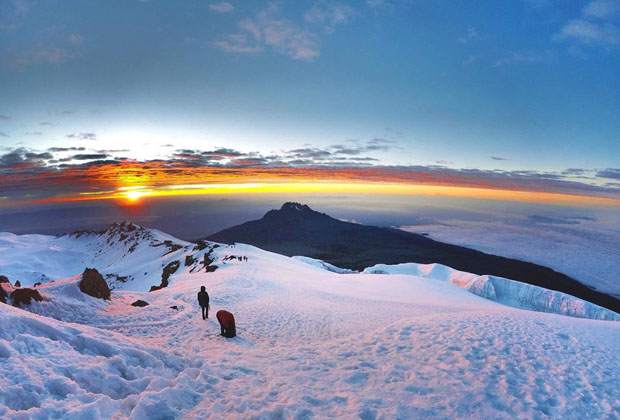
During the Pleistocene Epoch, around 600,000 years ago, Kilimanjaro's volcanic activity waned, and the mountain's summit was engulfed by ice sheets, giving birth to its iconic glaciers. The cyclical expansion and retreat of these glaciers, driven by fluctuations in temperature and precipitation, have profoundly influenced Kilimanjaro's landscape, carving deep valleys, cirques, and moraines into its slopes.
Kilimanjaro's geological diversity is evident in its varied rock formations, which range from ancient Precambrian gneisses and granites to more recent volcanic lavas and ash deposits. The lower slopes of the mountain are blanketed with fertile volcanic soils, supporting lush montane forests and savanna ecosystems, while the upper reaches are characterized by barren alpine deserts and glacial moraines.
Although Kilimanjaro is no longer an active volcano, it continues to undergo geological transformation due to erosion, weathering, and glacial dynamics. The retreat of the mountain's glaciers, attributed to climate change, has accelerated in recent decades, raising concerns about the long-term viability of Kilimanjaro's iconic ice fields and their ecological impact on surrounding ecosystems.