These questions cover a range of topics related to Mount Kilimanjaro, from its physical characteristics and climbing logistics to its cultural and environmental significance
Mount Kilimanjaro, Africas tallest peak and the world's highest freestanding mountain, stands as a majestic sentinel on the Tanzanian horizon. Its snow-capped summit, shrouded in myth and legend, beckons adventurers from around the globe to embark on the ultimate alpine challenge.
Rising abruptly from the surrounding plains, Kilimanjaro's towering silhouette dominates the landscape, its volcanic origins cloaked in mystery and allure. The mountain comprises three distinct volcanic cones: Kibo, Mawenzi, and Shira, each offering its own rugged beauty and unique character.
Kilimanjaro's slopes are a testament to nature's diversity, encompassing lush rainforests teeming with life, alpine meadows adorned with colorful flora, and barren expanses of volcanic rock. The mountain's rich ecosystems provide sanctuary to a plethora of wildlife, from elusive leopards and majestic elephants to agile antelopes and vibrant bird species.
Climbing Kilimanjaro is a journey of contrasts, a test of endurance and determination set against a backdrop of unparalleled natural splendor. Trekkers traverse through verdant forests, across windswept moorlands, and over rugged terrain, each step bringing them closer to the roof of Africa.
As climbers ascend higher, the air grows thin, and the landscape transforms into an otherworldly realm of ice and rock. The summit, Uhuru Peak, stands as the ultimate prize, a beacon of triumph and achievement against the backdrop of the African sky.
But Kilimanjaro is more than just a mountain; it is a symbol of resilience, a source of inspiration, and a reminder of the boundless wonders of the natural world. Whether standing in awe at its base or gazing triumphantly from its summit, Kilimanjaro leaves an indelible mark on all who dare to tread its slopes.
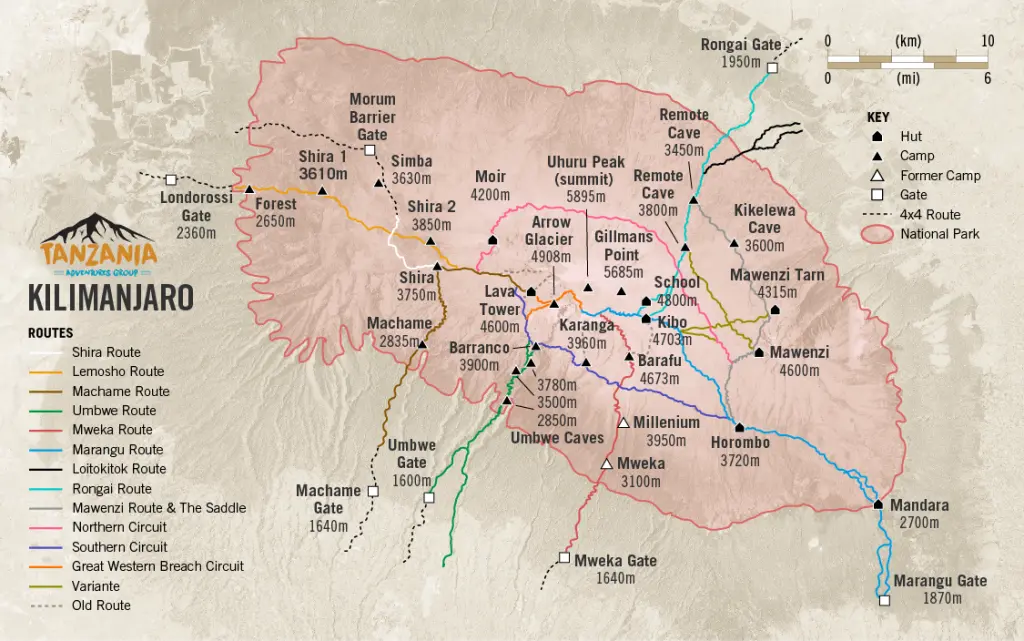
Mount Kilimanjaro is the highest mountain in Africa and the tallest freestanding mountain in the world. It is located in Tanzania and is a dormant volcano with three volcanic cones: Kibo, Mawenzi, and Shira.
Mount Kilimanjaro stands approximately 5,895 meters (19,341 feet) tall, making it the highest peak in Africa.
The best time to climb Kilimanjaro is during the dry seasons, which typically occur from late December to early March and from late June to October. These periods offer clearer skies, drier weather, and better visibility, increasing the chances of a successful summit.
The duration of a Kilimanjaro climb can vary depending on the chosen route and itinerary. Most climbs take between five to nine days, with longer durations allowing for better acclimatization and increased chances of summit success.
There are several routes to climb Kilimanjaro, each offering unique experiences and scenery. Some popular routes include the Machame Route, Lemosho Route, Marangu Route, Rongai Route, and the Northern Circuit.
Climbers need to pack essential gear such as appropriate clothing for varying weather conditions, sturdy hiking boots, sleeping bags, trekking poles, headlamp, and altitude sickness medication. it is essential to pack light but adequately prepare for the challenges of high-altitude trekking.
Altitude sickness, also known as acute mountain sickness (AMS), is a condition that can occur when ascending to high altitudes too quickly. To prevent altitude sickness on Kilimanjaro, climbers should ascend slowly, stay hydrated, eat a balanced diet, and consider taking medication like acetazolamide.
Mount Kilimanjaro is home to various wildlife species, including elephants, buffaloes, leopards, and various antelope species. The lower slopes are also rich in birdlife, with over 180 species recorded in the area.
Climbing Kilimanjaro presents several challenges, including altitude sickness, extreme weather conditions, and physical exhaustion. Proper preparation, acclimatization, and adherence to safety guidelines are essential for a successful climb.
While it is technically possible to climb Kilimanjaro without a guide, it is strongly recommended to hire an experienced guide and support team for safety, navigation, and logistical support. Guides are familiar with the terrain, weather patterns, and emergency procedures, increasing the chances of a successful and safe climb.
There are no strict age requirements for climbing Kilimanjaro, but climbers should be in good physical condition and adequately prepared for the challenges of high-altitude trekking. it is essential to consult with a healthcare professional and undergo proper training before attempting the climb.
Climbing Mount Kilimanjaro offers numerous highlights, including stunning scenery, diverse ecosystems, and a sense of accomplishment upon reaching the summit. Witnessing the sunrise from the summit of Uhuru Peak and experiencing the camaraderie of fellow climbers are often cited as unforgettable moments of the journey.
While it is technically possible to climb Mount Kilimanjaro solo, it is highly recommended to hire an experienced guide and a support team for safety reasons. Guides are familiar with the terrain, weather conditions, and altitude effects, making them invaluable resources for a successful climb.
No prior climbing experience is required to climb Mount Kilimanjaro, but a good level of physical fitness and mental preparation is essential. The trek involves hiking on steep and challenging terrain, so it is recommended to train beforehand and acclimatize properly during the climb.
The conservation efforts to protect Kilimanjaro's ecosystem are multi-faceted, involving various stakeholders such as local communities, governmental organizations, non-profits, and international bodies. Some key initiatives include:
Yes, climbing Kilimanjaro is often intertwined with cultural and traditional rituals, especially for the local Chagga people who inhabit the mountain's foothills. Some of these rituals and practices include:
Technically, it is possible to climb Kilimanjaro without a guide, but it is strongly discouraged for several reasons
While there are no strict age requirements for climbing Kilimanjaro, it is important for climbers to be in good physical condition and have a reasonable level of fitness. Kilimanjaro is a challenging mountain, and the altitude, rugged terrain, and long hours of hiking each day can be demanding on the body. Additionally, climbers should consider the potential impacts of altitude sickness, which can affect individuals regardless of age or fitness level.
Most tour operators and guide companies recommend that climbers be at least 10 to 12 years old to safely attempt the climb. However, younger climbers may be permitted with careful consideration of their physical fitness and ability to acclimatize to high altitude.
it is crucial for climbers of all ages to undertake appropriate physical training and preparation before attempting to climb Kilimanjaro. This may include cardiovascular exercises, strength training, and hiking to build endurance and stamina.
Before embarking on the climb, climbers should consult with their healthcare provider, especially if they have any pre-existing medical conditions or concerns about their fitness level. Additionally, climbers should acclimatize properly during the ascent, take necessary precautions to prevent altitude sickness, and listen to their guides' advice regarding pacing and hydration.
Ultimately, while there are no strict age or fitness requirements, climbers should be aware of the physical and mental challenges involved in climbing Kilimanjaro and prepare accordingly to ensure a safe and enjoyable experience.