
Embark on a thrilling 3-day journey to conquer Mount Kilimanjaro, the tallest free-standing mountain in the world. This short, intense itinerary is designed for experienced hikers looking for a swift yet challenging ascent to the summit. Discover the preparation, route, and key considerations for this high-altitude adventure.
Mount Kilimanjaro, towering at 5,895 meters (19,341 feet), is a dream destination for many adventurers. While most standard routes to the summit typically span 5-9 days, a 3-day Kilimanjaro climb is an exhilarating option for seasoned climbers seeking a rapid ascent. This condensed schedule demands excellent physical fitness, altitude acclimatization, and thorough preparation. Here’s a comprehensive look at what this intense journey entails.
Tanzania Adventures
Starting Point: Marangu Gate (1,870 meters / 6,135 feet)
Destination: Horombo Hut (3,720 meters / 12,205 feet)
Distance: Approximately 27 kilometers (16.8 miles)
The journey begins at Marangu Gate, where climbers register and commence their ascent through the lush rainforest zone. The path transitions to moorland, with its unique vegetation and sweeping views. The trek to Horombo Hut is demanding, covering a significant elevation gain. Climbers must pace themselves to avoid altitude sickness and conserve energy for the challenging days ahead.
Starting Point: Horombo Hut (3,720 meters / 12,205 feet)
Destination: Kibo Hut (4,703 meters / 15,430 feet)
Distance: Approximately 10 kilometers (6.2 miles)
On the second day, trekkers continue through the alpine desert towards Kibo Hut. The terrain becomes harsher, with sparse vegetation and increasingly rugged conditions. Climbers need to focus on hydration and steady pacing. This leg of the journey prepares them for the grueling summit push that begins in the early hours of the following morning.
Starting Point: Kibo Hut (4,703 meters / 15,430 feet)
Summit: Uhuru Peak (5,895 meters / 19,341 feet)
Descent: Horombo Hut (3,720 meters / 12,205 feet)
Distance: Approximately 21 kilometers (13 miles) round trip
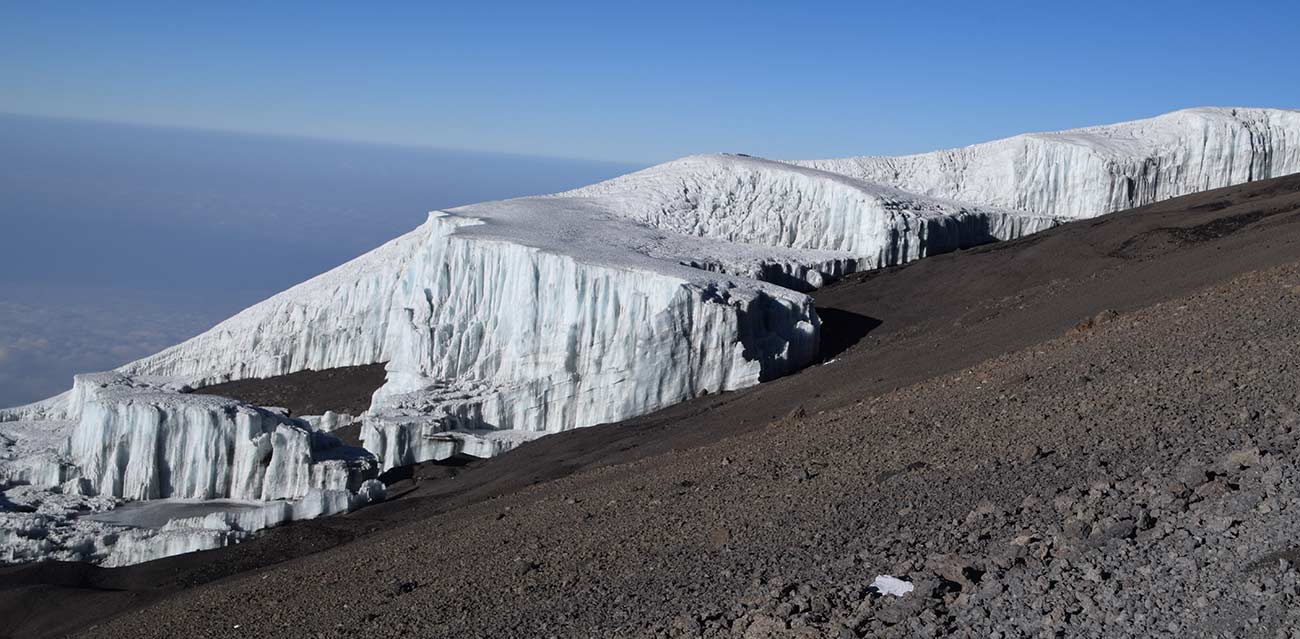
The final ascent begins around midnight, a grueling climb up the steep scree slopes to Gilman’s Point on the crater rim. From here, climbers continue to Uhuru Peak, the highest point in Africa, reaching it by sunrise. The summit offers a breathtaking panorama, a reward for the physical and mental challenges faced. After a brief celebration and photo opportunities, climbers descend rapidly back to Kibo Hut for a short rest and then continue down to Horombo Hut for the night.
Fitness and Experience: This climb is suitable only for experienced hikers with high fitness levels due to the rapid ascent and significant altitude gain.
Acclimatization: Prior acclimatization is crucial. Climbers are advised to have recent high-altitude experience to minimize the risk of altitude sickness.
Preparation: Thorough preparation, including cardiovascular training, strength conditioning, and familiarity with high-altitude environments, is essential.
Guides and Support: Engage reputable guides and porters who are familiar with the Marangu route and can provide necessary support and emergency assistance.